From User Generated Content to Learner Generated Contexts: the power of technology to build connections

I was reminded earlier this week of the interesting discussion we had at the Learning Technologies exhibition in January about User Generated Content (UGC) and how we can do even more than encourage people to generate their own content: we can encourage them to generate their own contexts for learning.  This is the idea of Learner Generated Contexts (about which you can read more in this book chapter) A Learner Generated Context (LGC) is generated through people (learners, teachers, parents, peers etc.) using technology to organize and interact with their learning resources in a manner that best meets the needs of learners. It is an enterprise that is driven by those who would previously have been consumers in a context created for them.

The resources that can be organized to generate the LGC are the People,

Places: the social and physical environments;

Things: such as digital technologies, books, equipment, and

Knowledge: the subject or skill being learnt.

All these resources exist and are part of a learners’ interactions with the world, the point is that a Learner Generated Context connects and inter-relates them a way that supports learning. The Learner Generated Context can be generated by groups working together or by individuals acting alone. Often teachers, mentors or peers have a key role to play in helping to generate the context, but sometimes a learner can act alone to generate a context that pulls together the People, Places, Things and Knowledge they interact with in a way that meets their learning needs.

For example, I was learning French a while ago and I wrote a blog about my experiences. My blog entry for the 28 April discusses how I was completing a particular piece of homework for the language school I was attending. The People and Things are highlighted in blue, the Knowledge and Skills in green and the Places in red:

“As I sat in front of the TV doing my homework ready for class I was amused to note that I find the gentle flow of French conversation in the background useful. This is a very different situation to that in force when I last learnt French many years ago when TV and homework certainly did not mix. I feel I am benefitting from my decision to spend a section of the day in French immersion as far as possible. This was helped with a good start from William, who was on good form this morning and aided by my understanding a little more of the one o-clock news. I was very amused to see the tractors in Paris as farmers protested about falling prices and stricter regulation: they would prefer to return to the EU rules. The farmers had taken their tractors to Paris and had travelled from Place de Nation to Place de la Bastille and from Place de la Bastille to Place du Republique If I understood the bulletin correctly the Parisians who were interviewed seemed, as ever, patient and understanding of the protest despite the fact that it seemed to be blocking much of the traffic. Mind you I don’t think any motorists were amongst those interviewed. Now that I am back in France, after coming from England, I continue to notice the difference in people’s attitudes to industrial action here.”

With a little bit of thought and some fairly ordinary and readily available technology I can connect and link these resources in a way that supports my needs as a learner to generate my own learner generated context.

As I walk from Malmousque to the French language school my mobile phone beeps to indicate a diary entry that reminds me to try to learn some vocabulary as I walk. The words appear on the screen of my mobile phone and these are linked to their pronunciations from forvo.com. Some of the words are picked from the TV report about the farmer’s protest that I saw on TV yesterday and there is an audio recording of the broadcast for me to listen to that has been taken from the TV station’s website.

Vision for science and mathematics education, but what role for technology?

The RS are  calling for views for the ‘Vision for science and mathematics education 5-19’ project and yet there is little mention of a role for technology and technology enhanced learning expertise is not abundant on the advisory panel. Why I wonder? We clearly need to communicate the value of TEL for science and maths much more effectively.

For example, last year in response to the Education White Paper colleagues and I concluded that we know that well-designed technologies can be used to good learning effect through:

  • the creation and use of microworlds and simulations e.g. simquest, RoomQuake;
  • dynamic computational modelling to support software that adapts itself to the learner. This is effective for well-defined subject knowledge domains (including professional practice), and procedural and thinking skills e.g. Cognitive Tutors, for maths
  • participatory and personal toolkits to support inquiry-based learning e.g. participate, nquire;
  • games and game development, if carefully designed can motivate learners, including those who are currently marginalised or underperforming, e.g. UrbanScience, ZombieDivision;
  • versatile representational spaces to help people to see things differently and tackle the  unlearnable representations that can characterises ‘unlearnable’ material e.g. Migen.

Squares in a round world: has research about technology and learning passed its sell by date?

I really enjoyed my trip to see the David Shrigley Brain Activity exhibition at the Hayward. And was amused by the endearing hand drawn animation about new friends in which a square enters a round world and … well I won’t spoil it for you. But it made me wonder if researchers run the risk of being squares in a round world. This was prompted by the comment I mentioned in my last post that asked if technological pace was “making traditional research models and institutions look a little archaic?”So has research passed its sell by date in this fast-moving technological space and do we need to re-fashion ourselves out of our squareness, or help squareness to be better appreciated? What do us squares have to offer? Four sorts of research come readily to mind and I am sure there are more.

First, there is basic research about how people learn and about the nature of learning itself that can be applied to education in a digital world, both in terms of how to develop technologies and in terms of how to use technologies for learning, both informally and formally. This research does not go out of date but gets better and better, for example John Bransford and others work on the nature of transfer is mature and well grounded, it is rigorous and has developed over several decades. Perhaps one the reasons that research like this is timelessly useful is that it has a focus upon an ever-present issue: the nature of learning, rather than a changing space: the nature of a particular technology, category of technologies, or indeed particular practices. It is also the case that all those who are doing this research and all those who want to use this research share a common need: to understand more about how people learn. However, there is perhaps a need to better communicate this research in a way that makes it accessible and relevant to technologies as they change.

Second, there is research conducted by those who want to see how the learning and/or teaching process might be better supported through the use of technology. This research can also maintain its value, for example, if it has a focus upon the interactions that are important for teaching and learning and the manner in which different technologies do or don’t support that, rather than how to use a particular technology. Good example here are example Diana Laurillard’s classic work in her book Re-thinking University Teaching and the community of researchers who consider the nature of Instructional Design.

Thirdly, is the work done by those within research labs both in universities and companies that involves developing a technology and using it with learners and teachers, usually in small numbers, to see if it helps them to learn or teach so that learners learn more, or feel more motivated, or collaborate with others in a more supportive manner, or in answer to many other varieties of question. It is harder to see from the usual outputs from this category of research how it can be easily applied within practice, either informal or formal. One of the main reasons for this is that such research is about generating new technologies that are not yet in classroom and may not ever make it outside of the research lab. I have seen hundreds of such research projects very few of which see the light of real application. Sometimes they are only ever intended as a proof of concept to motivate some further research activity, but sometimes they are fit for purpose, but it is not the role of the research lab to take them into a development phase. There is a huge gap here between research and practice that means that many valuable research projects never get tested outside of small scale studies, but that is the subject worthy of more space than I have here.

Fourth, and finally for now, there is research that has a focus upon a particular technology, Video, Integrated Learning Systems, or Learning Platforms, for example. The currency of this research is more limited to the particular technology in question and therefore much more likely to go out of date. Although it has to be said that such research can also provide more generalisable findings: such as that about Integrated Learning Systems, which highlighted the impact of a learner’s context upon the efficacy or not of the technology, in this instance Integrated Learning System.

Research may be square, but most of it is not archaic. Squareness is good, but its beauty is currently only appreciated by a small community and that community needs to find better ways to get the word out to the wider world. At the same time that wider world has something valuable to contribute in the form of innovative practice and communities of people who use technologies in innovative ways and record their experiences in blogs, tweets and forums. Us research squares could do well to pay more attention to what this research in action has to contribute.

What’s Research got to do with it? TEL research and emerging technology, part 2

Well I said I would follow-up and continue the discussion about what research can say that can help those developing and using emerging technologies. Coincidentally (or not) I was pointed to a blog post yesterday about the pace of change of technologies  and in particular to the comments. I noticed that one of the comments made the very point that:
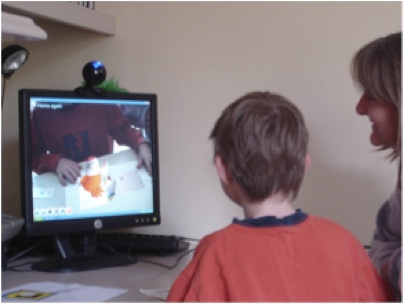
“…can we afford to wait for thorough research on some of these issues? If we do wait 3 years for some further research to be done won’t it already be chronically out of date? The technological landscape evolves at a thrilling pace, is it making traditional research models and institutions look a little archaic?”

So clearly there is a need for us researcher folk to better communicate what research has to say that is relevant. I’ll try to pick up on some key things that research can tell us over the next few posts. Sometimes the research that has something to say has been done very recently, sometimes it is specific to a new technology, but actually much of the time there are some basic research findings about how people learn, sometimes from way back that are still very relevant to what technology can do to support learning. These research findings have the advantage of having been tried, tested and developed over many years. Sometime new technologies allow us to benefit from this fundamental research in ways that were not previously possible.

For example, research has demonstrated that learning an additional langauge is assisted by being able to experience the new language and its culture. Technology offers access to authentic linguistic and cultural content, through for example, online newspapers, video, and other digital media in the target language. These may be created for native speakers, but they may also come with enhanced  language input, such as access to simplification, explanations, multimedia, subtitles for video.

Effective feedback is important for learning and technology can help – it can offer swift, timely and constructive feedback for students and teachers across all education sectors through interactive tasks that can be automatically marked. It can also support humans to provide feedback to learners using text, sound, images and  without needing to be in the same physical place as the learner.

Thinking about and understanding more about what we want people to be able to do in order to learn and then thinking about how particular technologies can help us to achieve this can be just as valuable, if not more valuable, than looking at the specific things that a particular technology can do.

What’s Research got to do with it? TEL research and emerging technology

I was delighted yesterday evening to watch Jean Dujardin accept his Bafta award for best actor in the pure joy film ‘The Artist‘. I was particularly struck by his finishing touch with the endearingly gloomy Buster Keaton face. The wisdom of the past being recognized so beautifully in this gesture and indeed in the almost silent movie that blends the appeal of old technology with the wonder of the new. Is there a parallel to be drawn with TEL research much of which languishes without seeing the light of the non-journal publication day. Has it passed its prime as the world has moved on? What can research, that often takes a long time to bear fruit, say that is meaningful for technological innovations that move so quickly that some applications leap from the lab to the pocket with no time for proper evaluations of how they might or might not support learning? Actually, it can say a lot, but perhaps, unlike Michel Hazanavicius, we have not yet found quite the right way to get the message across… to be continued

Still off my trolley? Reflections on technology to refresh the parts other forms of learning cannot reach

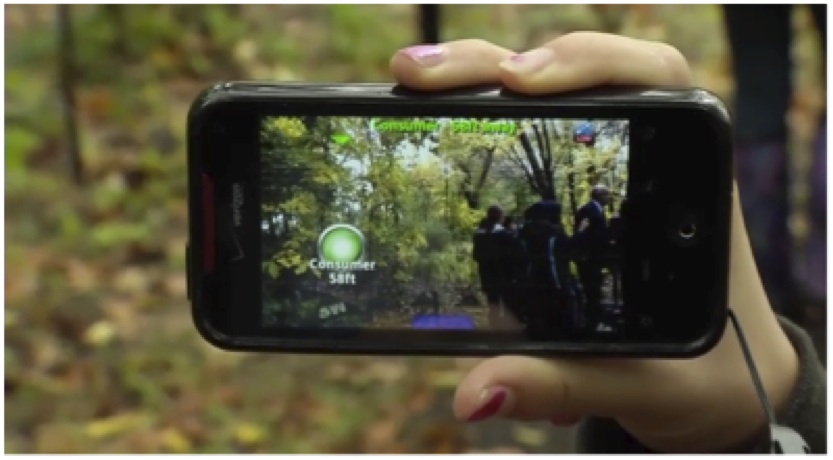
After a few days of contemplation I remain convinced about the potential of Augmented Reality to support learning,  particularly when combined with a range of other technologies through mobile phones, and embedded devices, for example.

Our own research has demonstrated that AR has the potential to promote learning and to motivate children to engage with learning activities. There is evidence that specific skills can be improved, that learners are motivated and challenged through  interactive problem solving activities and that AR can offer many opportunities for collaboration. Previous research projects, some of them quite old now, have also shown the potential of AR to enhance the presentation of knowledge across a range of real-world settings and the creation of engaging ways of interacting with simulations: demonstrating the broad potential of this technology across a spectrum of learning activities. See for example, Ambient Wood, Savannah, Environmental Detectives and there are more general lessons to be learned from studies with Ubiquitous. Augmented.Reality User Interfaces.

It is clear that to be effective, developers of AR for learning will  need a rich skill set in order to create applications that offer the necessary learner control, challenging interactivity and experience coherence. As previously noted this seems like a perfect task for participatory design with young people being an integral part of designing their own current and future technology rich learning experiences.

Off my Trolley or Technology to refresh the parts other learning cannot reach?

Lady on a TrainI am normally sluggish in the morning at first and then after a while my body and mind warms up and by the time I get on the train I am fit for a flurry of activity. I notice that many people are busily occupied in the morning in contrast to our sleepy souls on the evening trip back home. I suspect that my little burst of energy is something of an irritation to some of my work colleagues as my emails come flooding in as a large ungainly lump. This morning I was mid sentence when something caught my eye on the drinks trolley – it was a set of adverts appearing on a small video screen at the back of the cart. Adverts designed to entice people to buy the coffee that will burst open their day, and can be enjoyed any way, the water fresh from the spring to give them a zing or, rather less suitably for this hour, the Californian Merlot that costs a bit more dough. This distraction set me thinking and I mused to the rhythm of my neighbour’s mp3 player. I wondered if I had a trolley to entice people to engage with a particular brand of technology to support their learning what would my little adverts say and depict? I can’t promise to offer a definitive decision in a single blog post and reserve the right to come back this distraction again.

So, what would I want my trolley to advertise?… First, I think I would go for something where technology ‘refreshes the parts other forms of learning cannot reach’. There has been a proliferation of powerful and sophisticated digital technologies that are embedded in the environment; and built into small personal devices, televisions and personal computers. These technologies enable the augmentation of our environment through accessing physically tagged data, which can be retrieved and viewed from multiple perspectives. This puts a whole new meaning to the idea of ‘letting your fingers do the walking

The digital augmentation of reality (AR) can enable people to see the world around them differently, to share their own perceptions and to view the perceptions of others through stored information. AR has been shown to have the potential to support learning, engage learners and has been predicted to gain widespread usage within the next 2-5 years (2011 Horizon Report). Augmentation is not restricted to the visual layering of representations on a physical reality, it also manifests itself as audio augmentation. watch movie

Error
This video doesn’t exist

Neither is it restricted to the physical reality of a person’s context: popular locations based applications, such as foursquare, situate and integrate location and social media.

There have been few evaluations of the impact of AR technologies on learning, and yet the speed of its development for mobile phones has resulted in its migration from the research lab to teenager’s pockets – people are ‘just doing it’. As researchers, we don’t have a clear understanding of the impact of AR upon learning, attitude or behaviour change. We can only look and learn as this technology and our relationship to it evolves. It is a fascinating space where the boundaries between producers and consumers blur and the essence of participatory design is wonderfully and ‘curiously strong’. This might just be everyone’s very own personal ‘greatest show on earth’. greates show on earth

Heads in the Cloud

At a quick glance one might think that the title of this post means that I am thinking about the 2004 romantic drama with  Charlize Theron and Penélope Cruz
…and I do love films, as anyone who knows me will be aware.

However this post is about ‘Heads in the Cloud’ as opposed to ‘Head in the Clouds‘ and refers to the technological cloud that lets us connect with resources, people and applications from almost anywhere, without having to lug loads of technology around with us. Not that long ago, the idea of being able to access sophisticated computation and almost limitless information without needing to know where all this stuff is would have been nothing more than a romantic glint in the eyes of computer scientists and engineers. Now it is a reality: an important reality for learning. The implications of the cloud were the subject of a panel organised by Brightwave at the Learning Technologies exhibition.

When thinking about the panel it struck me that there are some useful things that research can tell us about how people think and learn that might help us make the best use of the cloud.

Firstly, technology driving learning closer to the workplace means that we can help learners to transfer and apply what they learn to their work.  We know that learning through a variety of real world experiences can help people to use their learning flexibly and effectively. The cloud enables learning across a variety of these all important real world contexts.

Secondly, there are important generational differences in the way that people use technology in their everyday lives. Young people in particular are early adopters of new and emerging technologies. These technologies can increase engagement and empower people with a feeling of control. We can therefore use the cloud to recognise and benefit from the expectations and skills that younger people bring to learning and the workplace. The cloud can be used to support on demand learning for example.

And thirdly, theories of socially distributed cognition show us that people can learn effectively in groups and that people can offload some of their thinking through tools, such as technology, and through other people. The cloud can help us to bring people and technologies together to make the most of these collaborative learning opportunities that can help people to learn in this distributed manner.

The panel audience thought that cloud technologies could be used to create a knowledge environment that encourages sharing and that learning designers would need to focus upon continuous learning. However there were also concerns that it would be difficult to prove what knowledge had been acquired, which suggests that new forms of continuous assessment, and self-assessment, might also be needed.

So the cloud for learning is about multiple heads in the integrated and single cloud, working together to solve increasingly complex problems and learning whilst they do so, using the technology to capture evidence of that learning. This is not a romantic notion, rather it is an achievable and desirable vision.

Debugging ICT in schools, and something for the old folk too

As New Year fitness resolutions come and go and birthdays add another year, one can’t help but contemplate what to do when one retires, these thoughts are fuelled by media and political attention to retirement age and the plight of the elderly within the NHS. For many years now I have told my children that I intend to study horse and dog racing when I get old. I believe that working out the odds will help to maintain my cognitive faculties, that following the races live, on the TV or radio will provide some excitement and that discussing the latest form of horses, riders and pundits with other fans will help to keep my social skills on song. Of course, this assumes no medical disadvantages to my capacities, but all being well this is an attractive plan.

More recently however, I have felt that this plan lacks any contribution back to society on my part, other than trying to ensure that I keep myself in good shape and reduce the chances of being a burden to my children. I have now added to my retirement plan rekindling my interest and skills in computer programming. There was a time when I was frequently to be found with a flask of coffee at 3am sat at my computer coding away. I could lose all sense of time when engrossed in trying to design a solution or debug a problem and could end up taking my children to school without having been to bed at all. I don’t want to return to these days of sleep deprivation and caffeine overload, but I do want to get back into the exhilaration of writing a recipe that makes something happen for me, for others and in ways that are not necessarily predictable: I want to hack for good when I get old. I may even be able to finesse my desire to follow the dogs and horses with my programming activity, and as I pointed out to my family, if I end up inadvertently doing something illegal, I could perhaps end up in the cheapest old people’s home a family could find, with regular meal times and exercise, plenty of time to think and work and regular visits from ones loved ones.

What is it that makes me want to go back to programming?

Perhaps it is a hankering for those halcyon days when I was younger and had the time to play, or when my studies and work required that I did; these were the days before I had to manage projects and have other people do the coding for me. It was when I had time within my working week to keep up to date with developments in a way that simply isn’t practical now. Or perhaps it is a realization that my dislike of ‘app culture’ is that it makes things too easy for people to do things without understanding how that thing is being done, and I like to understand how things are being done.

Is programming for everyone and should we all be learning to code?

I liked coding when I had the time to enjoy it and do it well and that is what drives me to go back to it, but I know many people who studied at the same time as me who hated coding and could not wait to stop having to do it. The benefit of understanding computer science, including coding is that it gives you the power to build things, like apps, rather than merely use them; to make things happen, rather than have them happen for you without understanding how or why; and to be part of a vibrant global community of people who like to code and work together to change the way that we interact with our technology. For a great example of young people developing and building innovative technical applications see the winning entry from Blatchington Mill School in Hove, to the Pearson Innov8 competition.

BLATCHINGTON Mill School version.

However, it isn’t for everyone and does not necessarily need to be. We certainly need a more technologically literate population, as noted by the Foresight Wider Implications of Science and Technology Report and the recent Royal Society report into the teaching of computing in schools. There is insufficient technological literacy to enable us to recognize and exploit the significant technological advances being made, but is everyone learning to code the answer?

The importance of being able to program was also amongst the virtues extolled the Secretary of State for Education in his recent opening address at the Bett 2012 exhibition and we should certainly give children the opportunity to learn to write code, to build applications and to get involved.

Gove at Bett2012

We all recognize that this means that we need to make sure that we have a teaching workforce who are equipped to teach such skills and that it needs a place within the curriculum and the school day. However, this is not a once and for all task, as is exemplified by the outdated and now obsolete ICT curriculum. The field of computing and programming changes at great speed and those who are part of it can be part of these changes. This dynamism and evolutionary speed means that the normal educational frameworks need adjusting to accommodate teaching a fast-moving, flexible and massively authored curriculum. It also has to be said that teaching, both the fundamentals of computer science, including programming is difficult: extremely difficult. Of all the teaching experiences I have had, the teaching of programming to undergraduates was the hardest subject area I have ever had to tackle. I wonder therefore how we really will maintain and support an expert computing teaching community.

There is of course a great role for technology itself to support the training and CPD of teachers and indeed to support the teaching of programming. For example, technology can provide a communication environment in which facilitators guide and link discussions so that practitioners share ideas, questions and probe more experienced, knowledgeable colleagues beyond their home workplace. But to build these sorts of networked practitioner forums through which teachers may form learning communities, they need to be provided with:

  • funding for practitioner time buy-out and small operational costs;
  • support for the roles of leading and co-ordinating facilitators, and
  • encouragement for self-organising communities, such as TeachMeet.

There also needs to be an acceptance that the benefits may not be immediate – practitioners and managers find it difficult to integrate technologies into their context. Their attitude and confidence with technology impacts on uptake and innovation requires. In the same way that Mr Gove accepts that his reforms may lead to a lowering in the number of top grades at GCSE and A Level, school leaders need to accept the possibility of some initial ‘failure’, and systematic mechanisms for dissemination by innovative teachers.

Technical skills alone are not enough

There is much more of importance that needs to be understood if people are to be able to build and use technology effectively and exploit its benefits for good. Students need to understand how people interact with and use their technologies to best effect. This is an interdisciplinary enterprise that includes social sciences as well as computer science. In order to build engaging applications of technology that are suitable for their purpose, students need to learn about the motivational and subjective experience of developing and using technology as well as the objective. Without this attention to Human Computer Interaction there is a risk that students will be unable to apply their new found technical prowess in ways that are effective for society and that will bring back the UK’s computing cutting edge.